
What is Backlash?
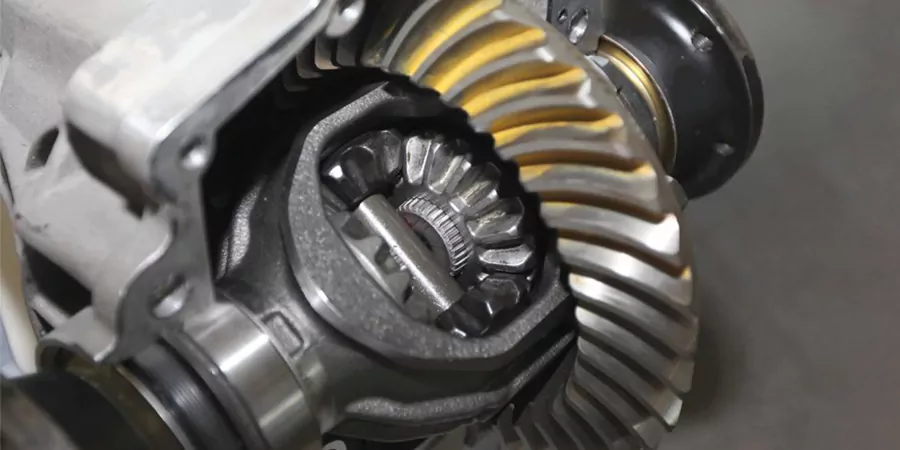
Backlash refers to the gap between the pinion gear and the ring gear in the differential. Proper backlash ensures smooth gear operation, preventing excessive wear and noise. If the backlash is too large, it can cause impact loads and unstable engagement. If it is too small, the gears may overheat or seize.
Backlash Specifications
Correct backlash is critical to ensure proper gear engagement, noise control, and long-term durability of your rear differential.
In most applications, the typical backlash range for ring and pinion gears is:
- 0.005″ to 0.010″ (0.13 mm – 0.25 mm)
However, exact specifications may vary depending on:
- Vehicle manufacturer (OEM requirements)
- Gear design and size
- Aftermarket vs OEM gear sets
It is always recommended to check the specific technical data for your differential model before making adjustments.
Why Backlash Accuracy Matters
Too Loose Backlash
- Clunking or knocking noise
- Increased gear impact load
- Accelerated wear
Too Tight Backlash
- Gear whine (especially during acceleration)
- Overheating
- Risk of gear seizure
Even when backlash falls within the “acceptable” range, improper setup combined with incorrect gear contact pattern can still lead to noise and premature failure.
Need Help Confirming Your Setup?
If you are unsure whether your backlash setting is correct, you can send us:
- Your gear contact pattern photos
- Basic setup details (model, application)
Our engineering team can help you analyze:
- Whether the backlash is appropriate
- If the gear pattern indicates misalignment
- Whether adjustment or replacement of the crown wheel and pinion is required
Backlash vs Pinion Preload
Backlash and pinion preload are two fundamentally different parameters, but they are often confused during differential setup.
Key Differences
Backlash
- The free movement between ring gear and pinion teeth
- Measured using a dial indicator
- Adjusted via carrier shims or adjusters
Pinion Preload
- The rotational resistance applied to the pinion bearings
- Set using a crush sleeve or shims
- Ensures bearing stability and prevents vibration
Why This Distinction Matters
Incorrect pinion preload will directly affect backlash stability. For example:
- Insufficient preload
- Causes gear movement under load
- Leads to inconsistent backlash and noise
- Excessive preload
- Overheats bearings
- Accelerates bearing failure
Correct Setup Sequence
A proper differential setup should always follow this order:
- Set pinion depth
- Set pinion preload
- Install carrier and adjust backlash
- Verify gear contact pattern
Skipping or mixing these steps is one of the most common reasons for gear noise after installation.
Steps to Adjust Backlash

1. Required Tools and Materials
- Dial Indicator – Measures backlash
- Magnetic Base – Secures the dial indicator
- Gear Marking Compound – Checks gear contact patterns
- Torque Wrench – Tightens bearing cap bolts
- Shims or Adjuster Bolts – Adjusts differential backlash
2. Step-by-Step Adjustment
Step 1: Measure Current Backlash
Secure the Dial Indicator: Attach the magnetic base to the housing, positioning the indicator tip against the ring gear.
Measure Backlash: Rotate the pinion gear back and forth by hand and record the dial indicator reading.
Standard Range: Typically, backlash should be between 0.005-0.008 inches (0.13-0.20 mm) (refer to the vehicle or gear manufacturer’s manual for exact specifications).
Step 2: Adjust Backlash
- Method 1: Using Shims
- If backlash is too large: Add shims to the ring gear side to reduce the gap.
- If backlash is too small: Add shims to the pinion gear side to increase the gap.
Method 2: Using Adjuster Bolts
Some differentials (such as Toyota and Dana models) use adjuster bolts that can be turned to modify backlash directly.
Step 3: Check Gear Contact Pattern

Apply Gear Marking Compound
Spread the compound evenly over multiple gear teeth.
Rotate the Gears
Rotate the pinion gear by hand to turn the ring gear.
Inspect the Contact Pattern
Proper Engagement: The pattern is evenly centered on the tooth surface.
Too Close to the Root (backlash too small): Increase backlash.
Too Close to the Tip (backlash too large): Reduce backlash.
Step 4: Final Confirmation
Re-measure backlash to ensure it is within the standard range.
Check if the gears rotate smoothly without abnormal noise.
Tighten all securing bolts to prevent loosening due to vibration.
Gear Pattern Check
Backlash measurement alone is not enough to confirm a correct setup. The gear contact pattern is the final verification step to ensure proper alignment between the ring gear and pinion.
A correct pattern should be:
- Centered on the tooth surface
- Evenly distributed
- Not biased toward the heel or toe
If you’re unsure how to read the pattern, refer to this detailed guide:
Reading Tooth Contact of Crown Wheel and Pinion
Gemini said Learn to read and adjust crown wheel and pinion tooth contact patterns. This guide covers backlash and pinion depth to ensure perfect gear alignment.
Common Issues and Solutions
Even correctly measuring backlash and setting preload doesn’t guarantee a trouble-free differential. Here are the most common issues we see and how to address them:
1. Backlash Too Loose
Symptoms: Clunking or knocking under acceleration or load
Cause: Carrier adjustment or shims incorrect
Solution: Adjust backlash according to manufacturer specs, then verify gear contact pattern
2. Backlash Too Tight
Symptoms: Gear whine, especially under acceleration
Cause: Shims too thick or carrier misaligned
Solution: Recheck preload and backlash, ensure pinion depth is correctLorem ipsum dolor sit amet, consectetur adipiscing elit. Ut elit tellus, luctus nec ullamcorper mattis, pulvinar dapibus leo.
3. Incorrect Gear Pattern
Symptoms: Persistent noise, uneven wear despite correct backlash
Cause: Misaligned pinion depth or improper carrier setup
Solution: Inspect gear pattern carefully; if unsure, send us gear contact pattern photos. We can analyze and advise whether adjustment is sufficient or replacement of the crown wheel and pinion is needed Guide: Reading Tooth Contact
4. Pinion Preload Issues
Symptoms: Inconsistent backlash readings, vibration, bearing noise
Cause: Preload too high or too low
Solution: Set preload before adjusting backlash. Confirm stability and torque specifications
5. Worn Components or Reused Shims
Symptoms: Noise or uneven contact pattern persists after adjustment
Cause: Old shims, worn gears, or bearings
Solution: Replace worn components; do not reuse old shims for critical adjustments
6. Ignoring Noise After Installation
Symptoms: Whine, clunk, or vibration develops after setup
Cause: Misdiagnosed setup, wear, or incorrect sequence of adjustments
Solution: Stop using the vehicle; inspect pattern, backlash, and preload. Send us setup details and pattern photos if uncertain
| Issue | Possible Cause | Solution |
|---|---|---|
|
Excessive gear noise |
Backlash too large or poor engagement |
Readjust backlash to standard range |
|
Overheating gears |
Backlash too small, insufficient lubrication |
Increase backlash and replace gear oil |
|
Contact pattern off-center |
Improper backlash adjustment |
Re-check and adjust shims or adjuster bolts |
|
Clunking noises |
Loose bearings or excessive backlash |
Tighten bearing cap bolts and remeasure backlash |
Conclusion
Regularly checking backlash and maintaining proper gear engagement can significantly extend the lifespan of your differential!
